
fitness revolution guide
Australian Fitness Revolution: Why Now Is Your Best Time to Start
"Monday morning. Your Apple Watch is buzzing again: 'You still need 7,000 more steps to reach your goal.'"
You glance at it. Swipe it away. Keep scrolling.
You know you should exercise. Your doctor said so. Your friends are doing it. Instagram is full of fitness influencers.
But you always think:
- "Gyms are too expensive" ($80+/month, students can't afford that)
- "I'm not that type of person" (Room full of muscle guys, I'll be laughed at as a beginner)
- "I don't have time" (Work/study/social/sleep, where's the time for gym?)
Sound familiar? You're not alone.
But this guide will change your mind. Because Australia's fitness world has undergone a revolution in recent years.
According to OzSparkHub's in-depth analysis of Australia's fitness industry, this is no longer the era of "old-school gyms." Fitness now is:
- 💰 Budget-friendly (as low as $7/month, cheaper than Netflix)
- 🎨 Personalized (from Pilates to VR fitness, there's something for you)
- 🤖 Tech-driven (AI coaches, smart tracking, virtual classes)
- 💕 Community-focused (group classes more lasting than bar socializing)
- 🧠 Mental healing (96% say their mood improved)
In the next 10 minutes, you'll discover why traditional "gym phobia" is outdated, and how to find what truly works for you.
📊 Data Speaks: What Your Peers Are Doing
Young Adult Fitness Participation Soaring
According to OzSparkHub's analysis of recent Australian Sports Commission data:
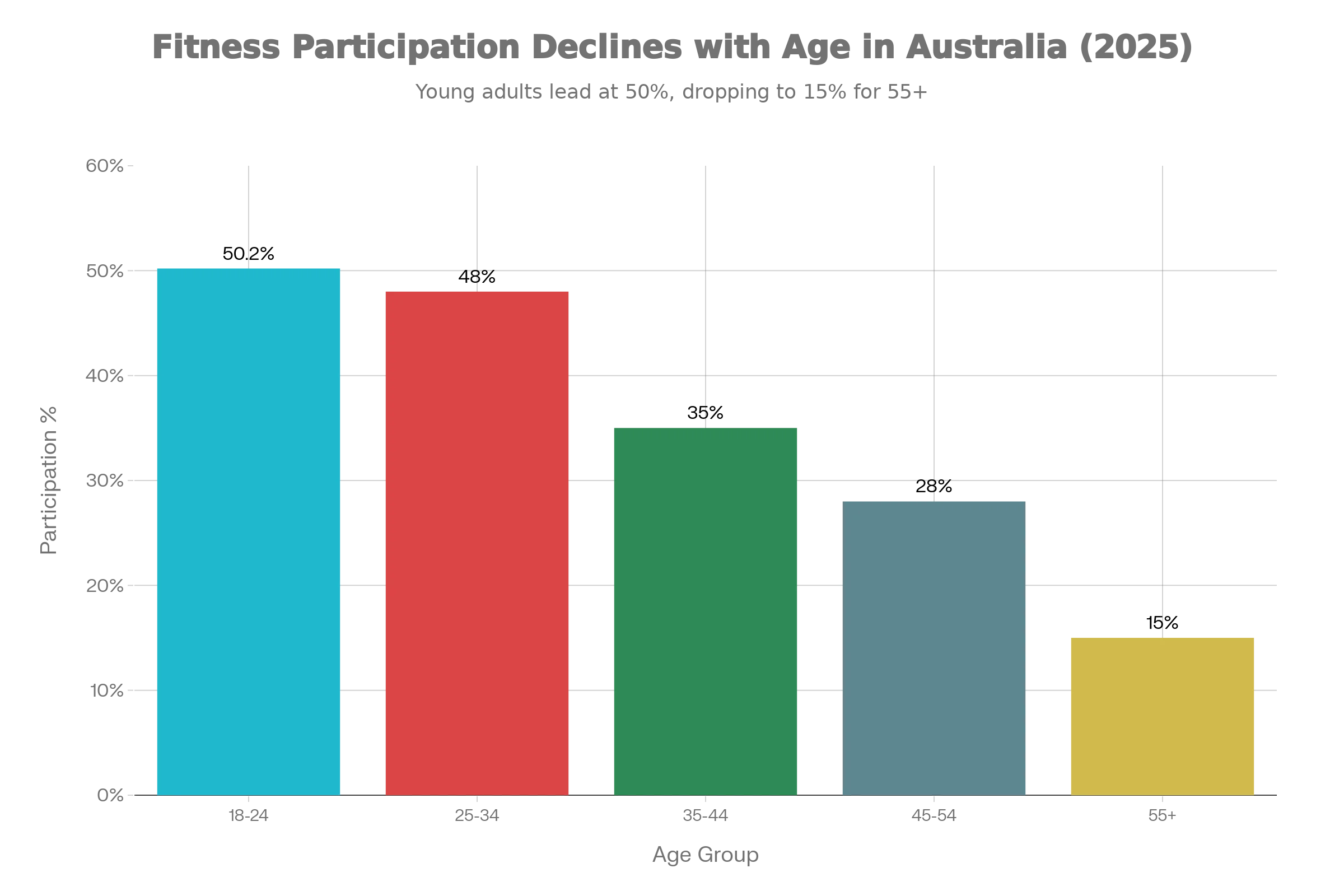
- 18-24 age participation: 50.2% - meaning 1 in 2 people around you are working out
- 25-34 age participation: 48% - the most active fitness demographic, over 1.9 million Australians
- Women comprise 54% of members - no longer a "male-only" activity
What does this mean? If you haven't started yet, your friends likely already have.
Health Investment Becoming Mainstream
According to OzSparkHub's research on Australian consumer health spending:
- Average annual health spending: $5,239 AUD - ranked 6th globally
- Recent daily fitness spending: $3.39 AUD - up 20.6% year-over-year
- Fitness industry total value: $3.7 billion AUD - over 8,000 fitness businesses
Simply put: The younger generation is taking health seriously. This isn't a trend. It's a movement.
🔥 Recent Hottest Fitness Trends (Not Your Parents' Gym)
1. Pilates Becomes the New Favorite
90% of participants are women - Pilates has about 1.2 million participants in Australia, with market size growing from $5.1 billion to $11.4 billion in recent years (8.4% CAGR).
Why do young people love Pilates?
- ✨ Elegant body lines (no bulky muscles)
- 💪 Enhanced core strength and flexibility
- 👯 Studio community vibe ("fitness sisters" feeling)
- 📸 Instagram-worthy studio designs
- 👗 Can wear super cute activewear
2. Exercise = Mental Health Healing
This isn't fluff, it's real data.
According to OzSparkHub's analysis of Australian physical challenge studies:
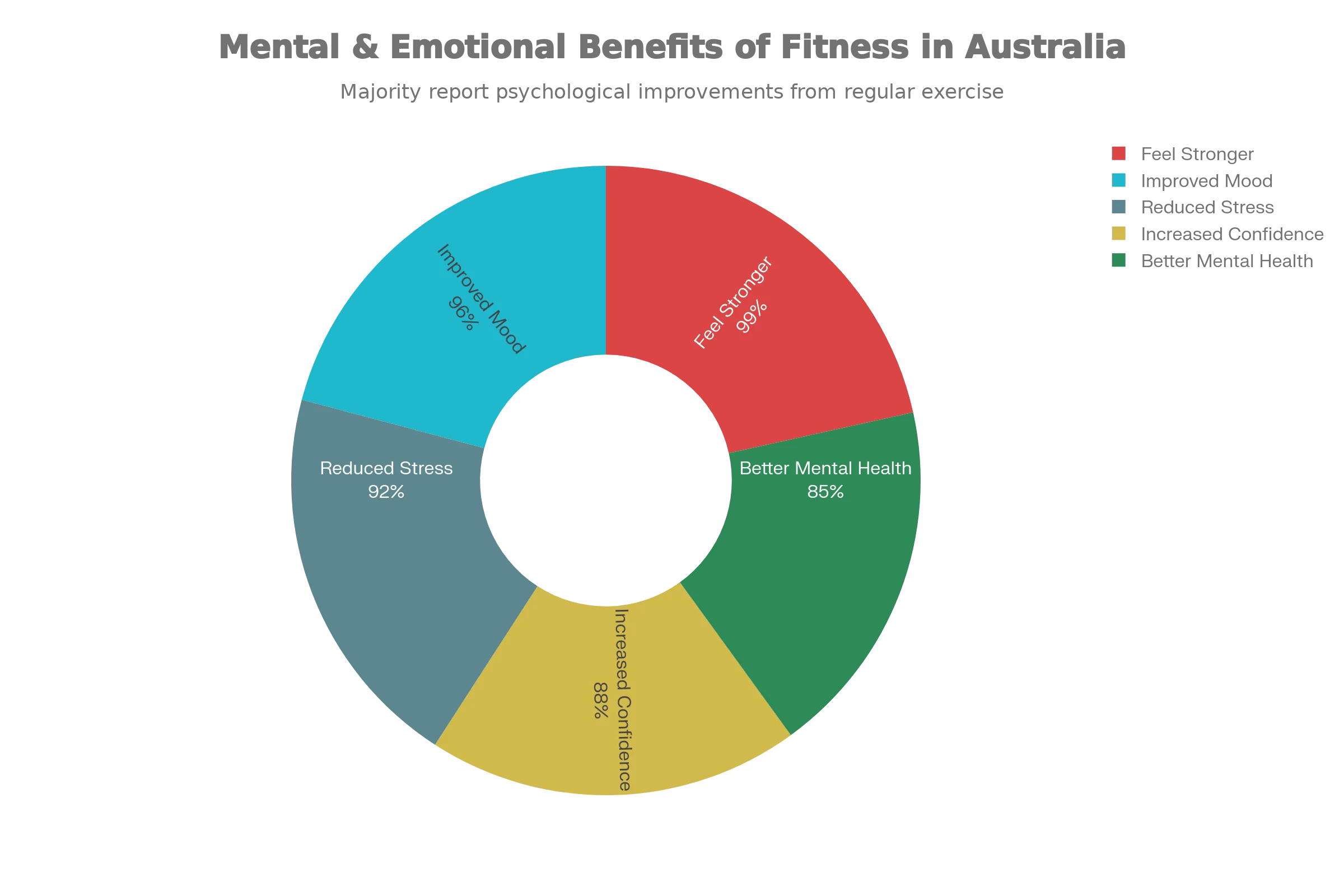
- 96% of participants reported mood improvement
- 99% felt healthier and stronger
- Exercise proven effective against anxiety and depression
What young people are saying:
- "Post-HIIT endorphins beat social media likes"
- "Group training gave me a sense of belonging"
- "Replacing phone scrolling with exercise improved my sleep quality"
- "Gym became part of my mental health self-care"
3. Wearables and AI Fitness Tracking
Over 5 million Australians use smartwatches and fitness trackers.
According to OzSparkHub's wearable technology market research:
- Market size: $3.84 billion AUD (projected to grow to $14.5 billion)
- Nearly 50% of consumers use AI fitness apps daily
- Popular apps: Strava, MyFitnessPal, Flo, Finch
Why it works for young people?
- 📊 Visualize progress (we all love data)
- 🏆 Compete and share with friends (Strava leaderboards)
- 🤖 AI personalized recommendations (based on sleep, stress, recovery)
- 🔗 Social media integration (share achievements)
4. Virtual Fitness No Longer a "Pandemic Substitute"
39% of Australians use digital workout platforms - virtual fitness market projected to reach $3.189 billion USD.
Hybrid fitness is the new normal:
- Monday: Live Pilates class at studio
- Wednesday: HIIT video at home
- Saturday: Strength training at gym
- Core advantage: Anytime, anywhere, freedom to choose
5. Boutique Studios Taking Over
According to OzSparkHub industry analysis:
- Boutique studios account for 38% of industry revenue (only 22% eight years ago)
- Growth rate: 13-15%/year
- Representative brands: KX Pilates, Barry's, F45 Training, Pure Barre
Why young people are attracted?
- 🤝 Tight-knit community and friend groups
- 🎨 Instagram-worthy design aesthetics
- 🎯 Specialized experience (not generic workouts)
- 👋 Coaches know your name
- 📏 Small class sizes, high personal attention
6. Functional Fitness = Real-Life Strength
Forget bicep curls in the mirror.
Functional fitness focuses on real-world movements: lift, bend, squat, push, pull.
Why it's popular? Because strength should be useful, not just good-looking:
- Easily lift luggage
- Move furniture without injury
- Daily life becomes easier
7. Group Classes = New Social Scene
85% of participants feel more motivated in group settings.
Whether it's Spin, HIIT, or yoga, collective energy is real. Friends made at the gym can sometimes be more lasting than those from bars.
8. Senior Fitness Ranks First (But This Matters to You)
Australia's aging population means more funding and attention for all age fitness programs.
Key insight: If you build good habits now, your future self will thank your present self.
💰 Fitness Cost Reality (Budget-Friendly Options)
How Much Do You Need to Spend?
According to OzSparkHub's research on Australian gym pricing:
| Type | Monthly Fee | Best For |
|---|---|---|
| Budget Options | $10-$30 | Students, budget-conscious |
| Standard Membership | $50-$60 | Those wanting group classes |
| Average Cost | $81 | Australian average |
| Premium Boutique | $80-$150 | Those seeking specialized experiences |
Good news: Top Gym Australia offers $7/month casual membership with no joining fees!
Not Just Membership Fees
Other investments in Australia's fitness ecosystem:
- Wearables: $350-$600 (Apple Watch), but free apps work too
- Sports Nutrition: $2.5 billion market, projected to grow to $4 billion
- Personal Training: $50-$150/hour (depending on experience)
- Recovery Services: Sauna, ice baths, massage (increasingly mainstream and affordable)
Financial advice: Start with cheap membership + free apps = sufficient. What matters is consistency.
🚀 Technology Changing the Game
AI and Personalization
Nearly 50% of consumers use AI fitness apps daily (according to OzSparkHub analysis).
Your AI fitness coach can know:
- Your favorite exercise types
- When you have energy
- Your recovery needs
- What motivation works for you (competition? community? data?)
Wearables and App Integration
Imagine:
- Apple Watch tracks your heart rate variability (HRV) and sleep
- Apps recommend intensity based on recovery status
- Strava shares with friends, creating friendly competition
- MyFitnessPal connects nutrition and training data
Top App Rankings (according to OzSparkHub user research):
- Strava (running, cycling)
- MyFitnessPal (nutrition tracking)
- Flo (women's health)
- Finch (mental health)
- Apple Health (integrated ecosystem)
VR and Gamification Future
Though still early, VR fitness is emerging - making workouts more like playing games than chores.
Imagine: HIIT training in a virtual space station, or yoga class in an ancient temple.
🧊 Recovery No Longer Just for Elite Athletes
Why Recovery Matters
According to OzSparkHub's health spending analysis, Australians spend $5,239 annually on health. Recovery tools are moving from elite exclusivity to mainstream:
- Reduce muscle soreness (DOMS)
- Improve sleep quality
- Lower stress and cortisol
- Accelerate progress
- Enhance immune function
Recovery Options Available in Australia
- Infrared Sauna - Deep heat therapy, improves circulation
- Ice Baths - Reduce inflammation (Revel Saunas, etc.)
- Compression Therapy - Speed recovery (Prime Recovery)
- Massage and Stretching - Increase flexibility (Recovery Lab)
Recovery = Part of Self-Care. 30 minutes in sauna after ice bath? That's investing in yourself.
💡 Practical Getting Started Guide
Step 1: Choose Your Tribe
What do you want?
| Need | Recommended Option |
|---|---|
| Community First | Boutique studios, group classes |
| Flexibility & Convenience | 24-hour gyms, virtual classes |
| Personalized Guidance | Personal training (1x/week) |
Step 2: Choose What You Enjoy
#1 Secret to fitness success? Choose what you'll actually do.
- Hate treadmills? Don't do it
- Love dancing? Try dance cardio classes
- Like team sports? Try CrossFit or HIIT studios
You'll do what you enjoy. It's that simple.
Step 3: Leverage Technology
- Download fitness apps (Strava, MyFitnessPal) - many free
- Link accounts with friends for friendly competition
- Track progress, not just workload
- If affordable, use wearables to track heart rate, sleep, recovery
Step 4: Community First
Join a community that will actually make you show up.
Science is clear: Community and accountability are the biggest predictors of long-term consistency.
Step 5: Don't Compare
Instagram fitness influencers spent 5 years to get where they are.
Your progress is your victory. No matter how small it seems.
❓ Frequently Asked Questions
Q: Is gym really worth it? Can't I just exercise at home? A: According to OzSparkHub user research, 85% of people exercising in group settings feel more motivated. Home workouts work, but community and accountability are key to long-term consistency. Hybrid approach (gym + home) works best.
Q: As a woman, will I be stared at in the gym? A: According to OzSparkHub industry analysis, women now comprise 54% of gym members. Many studios (like Pilates, Pure Barre) are 90% women. Choose women-friendly environments, or join women-only classes.
Q: I'm on a budget, are $7/month gyms legit? A: Absolutely! Top Gym Australia and others offer $7-$10/month memberships with full equipment. The only difference might be no group classes or personal training, but if you just need equipment, these options are extremely cost-effective.
Q: Are wearables worth the investment? A: According to OzSparkHub research, 5+ million Australians use smartwatches. But free apps (Strava, MyFitnessPal) are sufficient too. If budget allows, Apple Watch or Whoop can provide deeper recovery and sleep tracking.
Q: I'm a complete beginner, where should I start? A: 1) Choose a gym within budget ($7-$30/month options) 2) Download free app (Strava or MyFitnessPal) 3) Attend 1-2 group classes (find your community) 4) Consistency over perfection.
Q: Does exercise really improve mental health? A: Yes. According to OzSparkHub's analysis of Australian physical challenge studies, 96% of participants reported mood improvement, 99% felt stronger. Exercise proven effective against anxiety and depression.
Q: Virtual fitness or physical gym - which is better? A: According to OzSparkHub data, 39% of Australians use virtual platforms. Best strategy is hybrid: Monday live class (community), Wednesday home workout (convenience), Saturday gym (strength). Flexibility is key.
Q: Are boutique studios worth $100+/month? A: Depends on your priorities. According to OzSparkHub research, boutique studios offer: tight community, personal attention, specialized experience. If these matter to you, worth it. If you just want equipment, budget gyms are more suitable.
✅ Action Checklist
Ready to start? Follow this checklist:
Week 1: Research and Trial
- List 3 gym options near home/work
- Compare prices and facilities (use OzSparkHub cost comparison)
- Book 1-2 free trial classes
- Download Strava or MyFitnessPal (free)
Week 2: Choose and Commit
- Select a gym/studio
- Sign up for cheapest membership ($7-$30/month)
- Set realistic goals (2-3x/week)
- Find a workout buddy (accountability)
Week 3-4: Build Habit
- Go at least 2x/week
- Try different class types (find what you enjoy)
- Track progress (app or journal)
- Reward yourself for small milestones
Month 2: Optimize
- Evaluate: Are you enjoying it?
- If not, switch type/location
- Consider joining group class or studio community
- If wanting upgrade, research wearables
🎯 Summary: Why Now Is the Best Time
According to OzSparkHub's comprehensive analysis of Australia's fitness industry:
✅ Your peers are doing it - 50% of 18-24 year-olds use gyms ✅ Options for every budget - $7 to $150/month, there's always a choice ✅ Mental health benefits are real - 96% of participants report mood improvement ✅ Technology makes it more fun - AI, wearables, apps change the game ✅ Community is the sticky factor - Friendships matter more than specific exercises
📖 About OzSparkHub
OzSparkHub is dedicated to providing data-driven career, lifestyle, and health insights for young Australians. Our fitness guide is based on in-depth analysis of 6+ million Australian fitness participants, 8,000+ fitness businesses, and a $3.7 billion industry, helping you make informed decisions.
Explore more health and healing guides:
Data Sources: This article is based on Australian Sports Commission, AUSactive industry trend surveys, IBISWorld market analysis, and other official data. All statistics verified by OzSparkHub.
Last Updated: Recent Created By: OzSparkHub Research Team 🦊
Ready?
Australia's fitness industry is valued at $3.7 billion, with 6 million participants, projected to grow to 9 million.
This isn't a trend. It's a movement.
The question is: Are you ready to join?
Starting doesn't require perfection. It just requires starting.
Choose a studio. Choose an app. Choose friends. Choose health.
💪 Start your fitness revolution today.